
Table of Contents
Why Do Puppies Chew Everything?
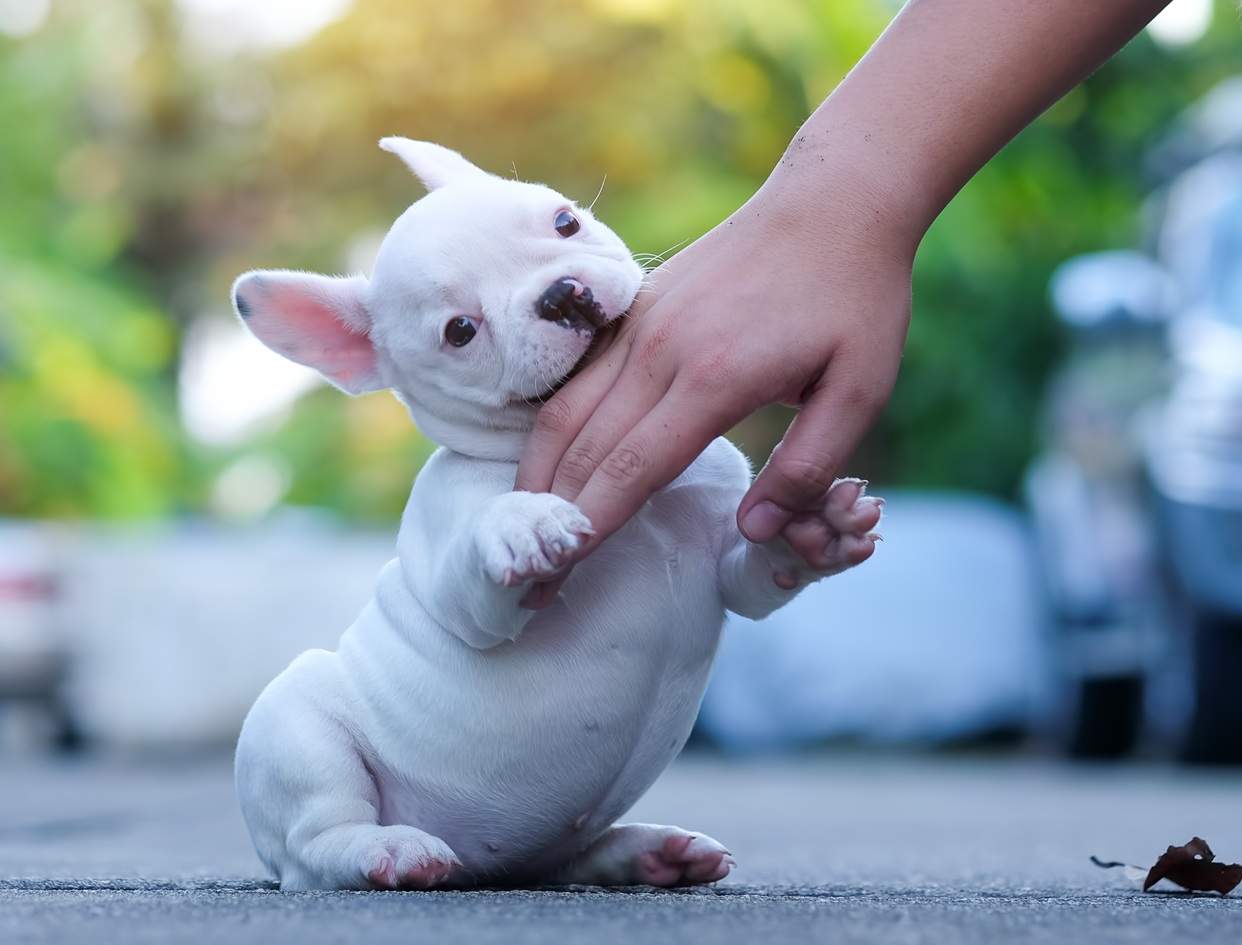
One minute, your puppy is happily playing with a toy. The next, your shoes, furniture, table legs, socks, and even your hands have somehow become chew toys.
Although frustrating, this behavior is usually a normal part of puppy development. Puppies explore their surroundings with their mouths, and chewing becomes even more common during the teething stage. According to VCA Animal Hospitals, puppies have 28 baby teeth that eventually make way for their adult teeth, and chewing can help relieve the discomfort associated with this process.
Puppy biting and chewing are therefore not simply signs of a badly behaved dog. They are behaviors that need to be understood and redirected.
The goal is not to stop a puppy from chewing altogether. Chewing is natural. The goal is to teach your puppy what is appropriate to chew and what is not.
What Happens During Puppy Teething?
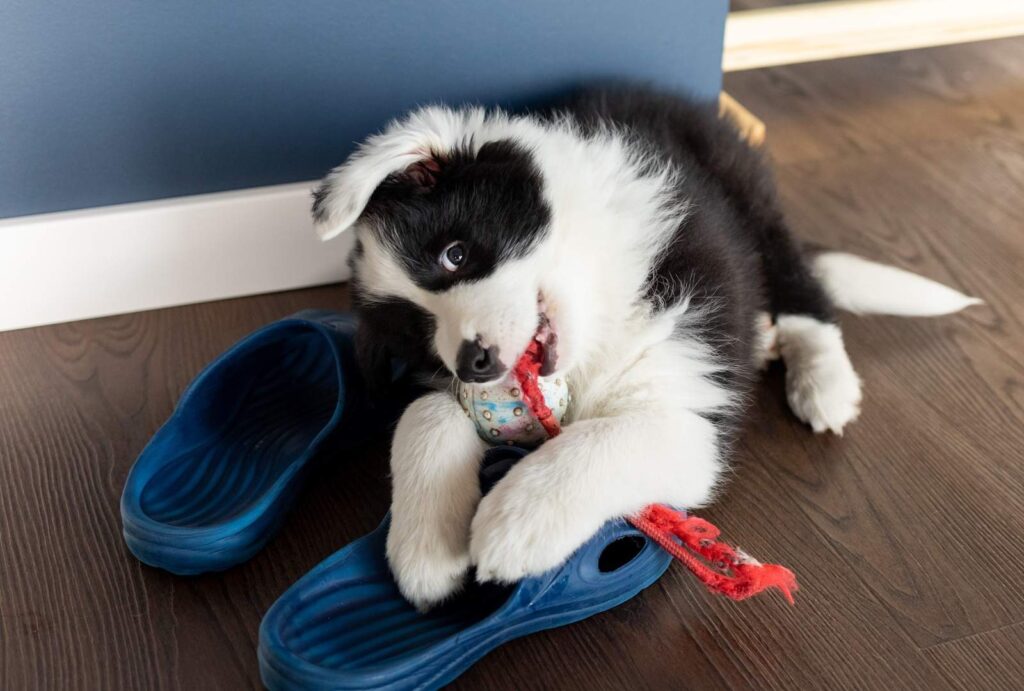
Puppy teething can be an uncomfortable time. A puppy’s baby teeth begin appearing when they are very young, and as the permanent teeth develop, the baby teeth gradually fall out.
The American Kennel Club explains that puppies typically begin losing their baby teeth around three to four months of age, with their adult teeth generally coming in by around six months.
Why Does Teething Make Puppies Bite More?
When a puppy’s teeth are developing, its gums can feel sore and irritated. Chewing provides stimulation to the mouth and can help relieve some of that discomfort.
This is one reason puppies may suddenly seem determined to chew almost anything within reach. A puppy might choose a shoe because it has an interesting texture, a wooden table because it is sturdy enough to push against, or your fingers because they are moving and available during play.
Teething is only part of the explanation, though.
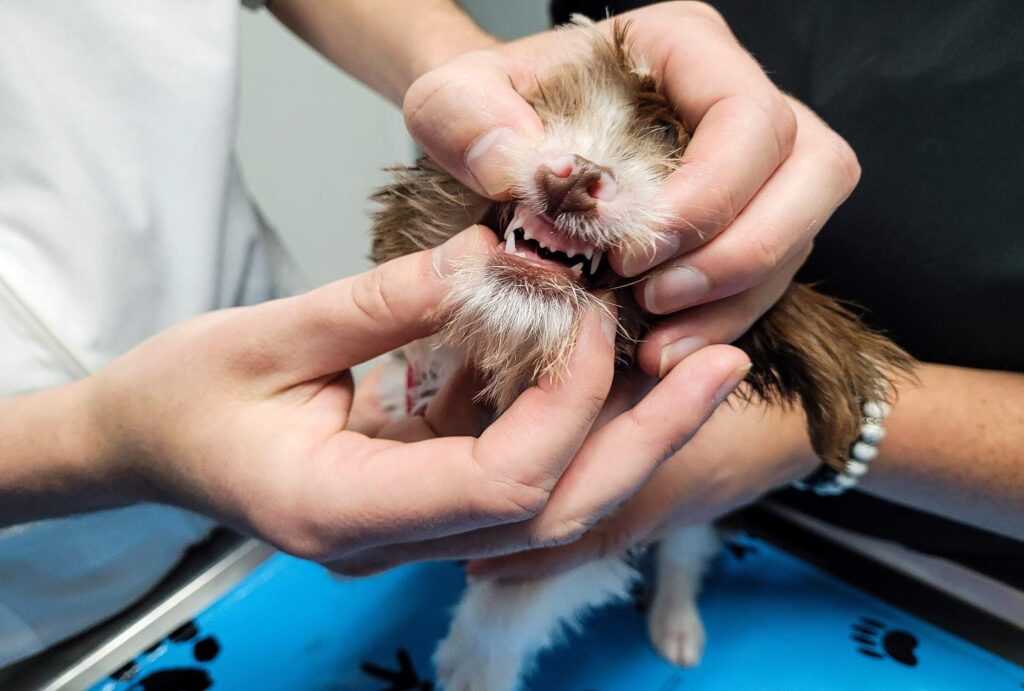
Puppies also use their mouths to investigate new objects, play with people and other dogs, and learn how much pressure they should use when biting.
Puppy Biting Is Also Part of Learning
Play biting is a normal part of puppy development. Puppies often bite and mouth their littermates during play, and those interactions help teach them about bite inhibition.
What Is Bite Inhibition?
Bite inhibition is a puppy’s ability to control the force of its bite. During play, puppies learn that biting too hard can make the other puppy stop playing.
The AKC’s guidance on puppy biting notes that teaching bite inhibition is an important part of puppy training. A puppy does not automatically understand that human skin is more sensitive than another dog’s body.
That means the behavior needs to be consistently redirected.
A puppy that bites during play is not necessarily aggressive. In many cases, it is simply being playful, excited, curious, or uncomfortable from teething. However, teaching appropriate behavior early is important because habits that are cute or manageable in a small puppy can become much more difficult when the dog is fully grown.
How to Stop a Puppy From Biting
Stopping puppy biting does not mean punishing the puppy every time its teeth touch you. Instead, focus on showing your puppy what behavior earns attention and what behavior makes the interaction stop.
Redirect Biting to a Suitable Toy
One of the simplest approaches is redirection.
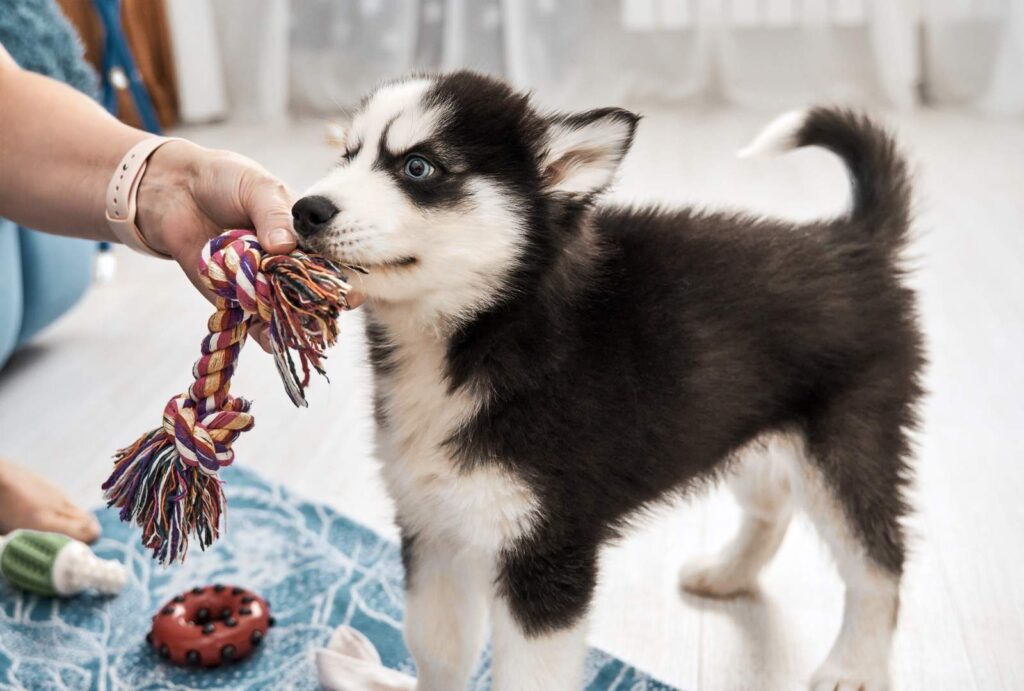
Keep suitable puppy toys nearby during play. If your puppy reaches for your hands, sleeves, or feet, calmly offer a toy instead.
This creates a clear alternative. The puppy still gets to bite and chew, but it learns that toys are the appropriate target.
The AKC recommends providing safe, puppy-appropriate chew toys and supervising chewing, particularly when introducing a new toy.
Stop the Game When Biting Becomes Too Much
Attention can accidentally reward biting. If a puppy bites and the game immediately becomes louder, faster, or more exciting, the puppy may learn that biting gets a reaction.
Instead, stop playing when the biting becomes excessive. Move your hands away, stand up, or briefly disengage.
The lesson is simple: gentle play continues, while painful biting ends the interaction.
Some puppies become even more excited when people shout or make dramatic noises. In those cases, a calm response and brief withdrawal of attention may work better. The AKC also recommends stopping interaction when mouthing becomes inappropriate.
What Should a Teething Puppy Chew?
Giving your puppy appropriate things to chew is one of the best ways to prevent unwanted chewing.
Choose Puppy-Safe Chew Toys
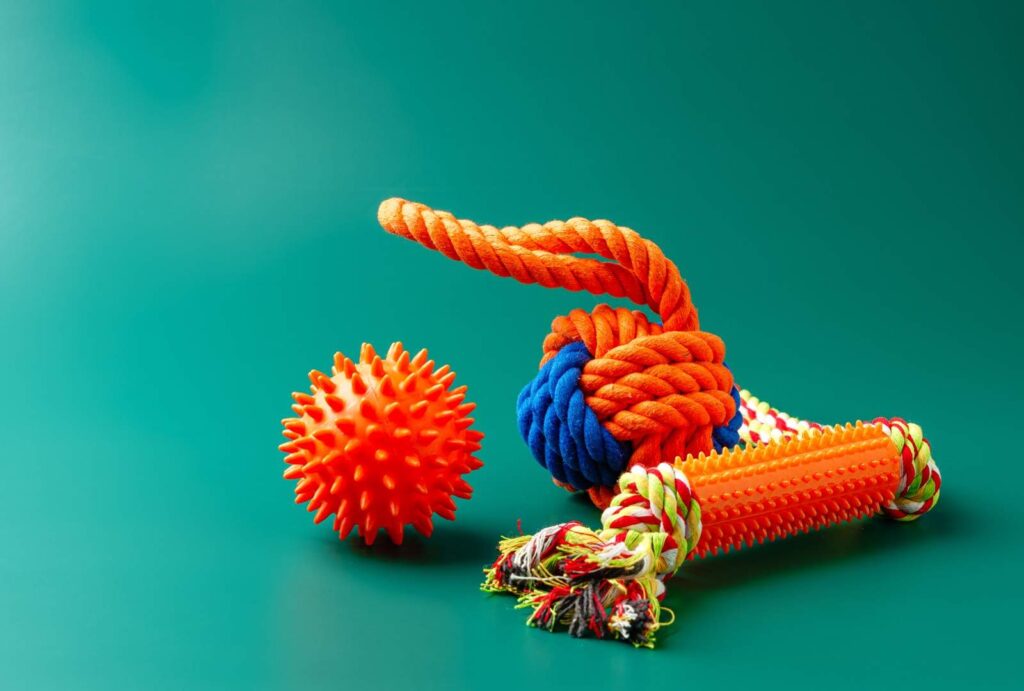
Look for toys specifically designed for puppies and appropriate for their size and chewing style. A toy should not be so small that it can become a choking risk, and it should not break apart easily.
Supervise your puppy when introducing new toys and inspect them regularly for damage.
According to VCA Animal Hospitals, veterinarians can help owners choose suitable chew toys based on a puppy’s needs. This is particularly useful because puppies vary considerably in size, chewing strength, and play style.
Try Cold or Frozen Options
Some puppies enjoy chilled or frozen puppy-safe toys because the cold can feel soothing on sore gums.
Always follow the manufacturer’s instructions for toys designed to be frozen or chilled. Avoid improvising with objects that could splinter, break, or become dangerous when frozen.
It is also important to remember that not every popular chew item is automatically safe for every puppy. A veterinarian can help you assess options based on the puppy’s age, size, breed, and chewing habits.
Why Is My Puppy Chewing Furniture, Shoes, and Other Things?
Teething may explain a lot of chewing, but it is not always the entire reason.
Puppies are naturally curious. Everything is new, and many household objects have interesting smells, textures, and shapes.
Boredom can also contribute to unwanted chewing. Puppies have physical and mental needs that include play, exploration, training, exercise, social interaction, and appropriate chewing opportunities.
VCA’s puppy behavior guidance emphasizes supervision and providing appropriate outlets for normal puppy behaviors. A puppy that has nothing suitable to do may simply find its own entertainment.
Puppy-Proof the Home
Training works much better when the puppy has fewer opportunities to make mistakes.
Keep shoes, clothing, children’s toys, electrical cords, and other tempting objects out of reach. Use gates or other safe barriers where needed, particularly when your puppy cannot be closely supervised.
This is not about making the entire house boring. It is about making the correct choice easier.
Keep several suitable toys accessible and rotate them to maintain interest. A puppy does not need access to every toy all at once.
What If My Puppy Bites When Tired?
Some puppy owners notice that biting becomes worse in the evening or after a long period of activity.
Overtired puppies can become excitable, mouthy, and less able to control their behavior. The AKC notes that tired or overstimulated puppies can become more prone to mouthing and recommends regular opportunities for naps and quiet time.
A consistent routine can therefore help.
After play, give your puppy an opportunity to settle down somewhere comfortable. Quiet chewing, calm interaction, or rest may be more useful than continuing an increasingly frantic play session.
A puppy that appears to have suddenly transformed into a tiny land shark may simply need a nap.
What Not to Do About Puppy Biting
It can be tempting to respond harshly when a puppy bites for the tenth time in five minutes. However, physical punishment and frightening responses can create additional behavioral problems and do not teach the puppy what it should do instead.
Avoid chasing your puppy around the house to retrieve an object, especially if the result is turning the situation into a game.
Do not punish a puppy for a mess you discover later. The puppy cannot connect a delayed correction with the earlier chewing behavior.
Instead, focus on supervision, management, redirection, and consistent training. VCA recommends preventing access to inappropriate objects while providing suitable alternatives and avoiding physical discipline.
When Should Puppy Biting Be a Concern?
Most puppy mouthing and teething behavior is normal, but there are situations where professional advice is appropriate.
Speak with your veterinarian if your puppy appears to be in significant pain, has unusual or persistent bleeding, has difficulty eating, or you notice problems with the development or loss of teeth.
The AKC recommends discussing retained puppy teeth with a veterinarian, as some baby teeth may need professional attention if they do not fall out normally.
Behavior also deserves closer attention if biting appears unrelated to normal play, is unusually intense, is accompanied by fear or guarding, or is becoming increasingly difficult to manage.
A qualified veterinarian or experienced positive-reinforcement trainer can help determine what is driving the behavior and what training approach is appropriate.
Helping Your Puppy Through the Teething Stage
Puppy teething and biting can be exhausting, but this stage does not last forever. The most effective approach is to remember that chewing is a normal behavior while teaching your puppy where that behavior belongs.
Provide appropriate chew toys, puppy-proof the environment, supervise closely, offer plenty of mental and physical enrichment, and calmly redirect unwanted biting. Consistency matters more than perfection. Your puppy may choose your shoelace immediately after enjoying a perfectly good chew toy. That does not mean training has failed. Puppies learn through repetition.
Building Good Grooming and Dental Habits Early
Teething is also a good time to start getting your puppy comfortable with basic hygiene and grooming routines. Gentle handling of the mouth, ears, paws, and coat can help make regular care less stressful as your puppy grows.
Dental care is particularly important as baby teeth are replaced by adult teeth. Alongside appropriate home care, professional teeth brushing and ear cleaning can form part of a dog’s regular hygiene routine. Grooming experiences such as bathing and drying can also help puppies become more familiar with being handled.
At Dog House Dubai, dogs can receive ear cleaning and teeth brushing, as well as shower and blow-dry sessions followed by a pet-friendly perfume treatment. An optional hypoallergenic shampoo upgrade is also available for pets with sensitive skin.
Also, read
Conclusion
Puppy teething and biting can make those early months feel chaotic, but the behavior has a purpose. Puppies chew to explore, play, learn, and often to cope with the discomfort of growing new teeth.
Rather than trying to eliminate chewing completely, teach your puppy where chewing is appropriate. With safe toys, good supervision, consistent boundaries, plenty of enrichment, and patience, those tiny teeth can become part of the learning process rather than a constant battle.
And yes, protecting your favorite shoes is also a perfectly reasonable training goal.