
Table of Contents
Bringing home a new puppy is one of life’s happiest milestones, but it also comes with a long list of responsibilities that many new pet parents underestimate. Between shopping for supplies, adjusting your schedule, and figuring out training basics, those first few weeks can feel overwhelming if you are not properly prepared.
The good news is that a little planning goes a very long way.
This step-by-step starter guide will walk you through everything you need to know to prepare your home, establish routines, and give your puppy the best possible start in their new environment.
Before Your New Puppy Arrives: Set Up for Success
Preparation is not optional when welcoming a new puppy into your home. Puppies are naturally curious and explore their surroundings with their mouths, which means anything within reach instantly becomes a potential chew toy.
Puppy-Proof Your Home
Take a slow walk through your house and look at everything from your puppy’s point of view. Electrical cords, loose shoes, houseplants, cleaning products, and small household items should all be moved out of reach.
Focus on:
- Securing electrical cables
- Removing small objects from floors and low shelves
- Using baby gates to block unsafe areas
- Closing access to trash bins
- Storing chemicals and medications in locked cabinets
The American Kennel Club explains that puppy-proofing is essential for preventing accidents and building safe habits early on. Their full guide is a helpful reference for new owners.
Create a Dedicated Puppy Area
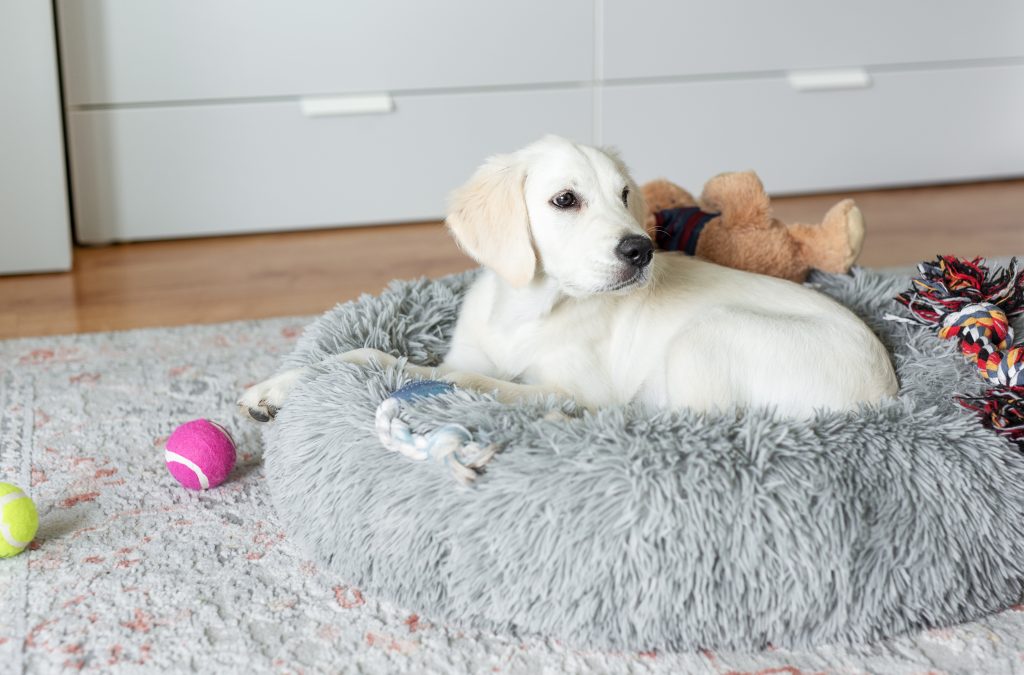
Set aside a quiet space where your new puppy can eat, rest, and feel secure. This “puppy zone” becomes their personal retreat and helps reduce stress during the adjustment period.
Include:
- A comfortable bed or crate
- Fresh water available at all times
- Chew-safe toys
- Puppy pads if you are starting with indoor training
Having a consistent space gives your puppy a sense of stability while they learn their new surroundings.
Stock Up on New Puppy Essentials
Avoid last-minute shopping by preparing your supplies before your new puppy arrives. At minimum, you should have:
- High-quality puppy food
- Food and water bowls
- Collar with ID tag
- Leash and harness
- Crate or playpen
- Several chew toys
- Basic grooming tools, such as a brush and puppy shampoo
You do not need to buy everything at once, but these essentials will help you navigate the first few weeks smoothly.
Establish a Daily Puppy Routine From Day One
Puppies thrive on structure, and creating a consistent routine early helps prevent behavior issues while speeding up house training.
A simple daily schedule should include:
- Morning potty breaks
- Meals at the same times each day
- Short play sessions
- Brief training moments
- Regular naps
- Calm evening wind-down time
Consistency teaches your puppy what to expect and helps them settle into your household faster. A predictable routine also makes life easier for you, especially during those early weeks when sleep may be limited.
Begin Training as Soon as Your Puppy Comes Home
Training does not start “next week.” It starts on day one.
Keep sessions short and positive, and always reward good behavior immediately.
Potty Training Basics
Take your puppy outside:
- First thing in the morning
- After meals
- After naps
- After playtime
- Before bedtime
Praise them right away when they go in the correct spot. If accidents happen indoors, clean thoroughly and move on without punishment.
Simple Commands to Start With
Begin teaching basic commands such as:
- Sit
- Come
- Leave it
Use treats and encouragement to build confidence. Five to ten minutes per session is enough at this stage, as puppies learn best in short bursts.
Socialization Is Just as Important as Training
Between eight and sixteen weeks, puppies are especially open to learning about the world around them. During this time, gently introduce your puppy to new people, sounds, surfaces, and environments.
Safe exposure to different experiences helps prevent fear-based behaviors later in life. Keep interactions calm and controlled, and always prioritize positive experiences over forced encounters.
Start Grooming Habits Early
Even if your puppy has short fur, regular grooming is still important for skin health, hygiene, and comfort. Early exposure also makes future grooming sessions much easier.
Get your puppy comfortable with:
- Gentle brushing
- Ear checks
- Touching their paws and mouth
- Short bath sessions
As schedules get busy, many pet parents choose professional grooming support for services like Shower & Blow Dry sessions, Ear Cleaning, and Teeth Brushing to keep their puppies clean and comfortable. If you ever need help maintaining your puppy’s hygiene, Dog House Dubai offers these services alongside boarding and daycare.
Having a trusted care option in place provides peace of mind, especially during your puppy’s early months.
Also, read
Prepare Yourself Emotionally
It is important to remember that puppies are still learning how to exist in a human world.
Your new puppy will cry at night, chew unexpected items, and have accidents indoors. None of this means you are doing a bad job. These behaviors are part of normal development.
Progress happens gradually, and patience is one of the most valuable tools you can bring to puppy parenting.
Plan Ahead for Busy Days
Life does not stop when you bring home a new puppy. Work commitments, appointments, and travel will still come up.
Having a plan for supervision, socialization, and care during busy periods makes a huge difference. Reliable daycare or boarding options can help ensure your puppy stays safe and engaged when your schedule gets full.
Thinking ahead now helps prevent stressful last-minute decisions later.
Conclusion: Build the Right Foundation
Preparing for a new puppy at home is about creating a safe environment, building consistent routines, and showing up with patience and commitment every day.
When you take the time to prepare properly, you give your puppy the structure they need to grow into a happy, confident adult dog. The early challenges fade quickly, but the bond you build during this stage lasts a lifetime.
Start strong, stay consistent, and enjoy every moment of your puppy’s journey with you.